Early Punk Days (2002)
Five kids in a New Jersey basement, turning rage into riffs before the world caught up.

The Early Punk Days (2002) refers to the formative, pre-fame period of My Chemical Romance, when the five-piece was still a scrappy New Jersey punk outfit playing small venues and building a following one show at a time. This era captures the band at its rawest—before the theatrical costumes, before the blockbuster albums, before the world knew their name. It is the garage-to-club chapter that fans often romanticize as the 'real' MCR, the sound and spirit that everything later grew from.
In the broader context of the band's legacy, 2002 represents the crucible: a tight-knit group of friends sharpening their identity in the local punk scene, writing songs that would later evolve into anthems, and deciding—often through sheer stubbornness—whether they were going to stay a local act or push for something bigger. Every fan who says 'I was there before the big stuff' is pointing at this window.
- Formation year
- 2001
- Hometown base
- New Jersey, USA
- Lineup (core five)
- Gerard Way (vocals), Frank Iero (guitar), Ray Toro (guitar), Mikey Way (bass), Bob Bryar (drums)
- Sound in this era
- Fast, aggressive punk rock with raw vocal delivery
- Label status (2002)
- Independent / unsigned
- Broader scene
- East Coast punk and hardcore club circuit
Lore & Background
Before the glitter, the black-and-white costumes, and the stadium-sized choruses, My Chemical Romance was just another band trying to book a Tuesday-night slot at a cramped club somewhere in the New Jersey suburbs. The 2002 lineup—Gerard Way screaming into a mic with a intensity that made the room feel smaller, Frank Iero and Ray Toro trading angular guitar lines, Mikey Way anchoring the low end, and Bob Bryar driving the whole thing forward—was still figuring out who they were. Their sound in this window was leaner, faster, and more overtly punk than what would come later. Songs were written in bedrooms and rehearsal spaces, riffed out in minutes, and tested on audiences of maybe forty people who showed up because a friend of a friend said the new band was 'pretty loud.'
What made this period feel electric to the small crowd that followed was the sense of immediacy. There was no marketing machine, no label A&R rep in the corner, no expectation. Just five friends who had a lot of feeling they needed to get out of their bodies and a setlist that could shift night to night. Gerard's vocal style—part shouted, part melodic, always emotionally naked—was already there, even if the songwriting was still finding its structural footing. The band was building a vocabulary: the way a chorus hit, the way a bridge could drop out to just bass and drums, the way a final chord could ring out into silence and leave the room stunned.
For fans who discovered MCR later, through the 2004 debut or the 2006 landmark album, this era is the 'origin story' layer. It explains why the band's identity always carried a punk-rock skeleton under the more polished, theatrical flesh. The DIY ethic, the refusal to be a 'normal' pop-punk act, the insistence on emotional honesty over radio-friendly safety—those instincts were forged in 2002, in rooms that smelled like stale beer and wet wool, where the only audience that mattered was the one standing close enough to feel the kick drum in their chest.
In Their Own Story
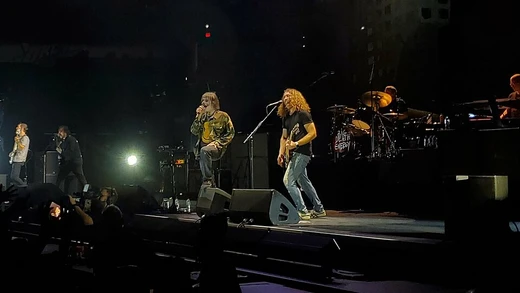
The venue was called something no one remembers anymore. A basement space off a strip mall in the suburbs, the kind of place where the PA system was held together by gaffer tape and optimism. It was a Thursday in late 2002, and the crowd was maybe thirty people—punks, skaters, a few college kids who'd followed a flyer from a friend's dorm. The band came out without a setlist taped to the amp. Gerard just started singing, and the first chord was so loud the bartender looked up from the register. Frank and Ray locked into a riff that felt like it had been waiting in their heads for weeks, and Mikey's bass line cut through the murk of the small room like a wire. Bob's snare hit with a crack that made the back row flinch. No one was recording. No one was writing it up. A kid in a flannel shirt later told his roommate, 'Dude, that band was insane,' and that was the whole review. The set ended, the amps hummed down, and five people in a room that was too small for what they'd just done looked at each other and said, 'Okay. What's next?' They didn't know. They just knew it couldn't stop.
Reader's Guide
Chapter One: The Basement Years
The broader scene in 2002 was a patchwork of East Coast punk, post-hardcore, and the tail end of the mid-'90s punk explosion. Bands were still playing 200-cap clubs, self-releasing EPs on cheap vinyl, and building reputations through word of mouth and zine coverage. The industry was wary after the grunge hangover and the early-2000s pop-punk wave, and independent scenes in New Jersey and New York were still the proving ground for anything that wanted to be taken seriously outside the label system.
Internally, the five members were still in the 'are we a band or a project?' phase. They had a name, a handful of songs, and a shared frustration with the local scene's predictability. Rehearsals were frequent, sometimes chaotic, always loud. Songwriting was collaborative but uneven—some pieces were fully formed, others were just a riff and a shouted hook that someone would flesh out later. The sound was faster and more aggressive than what would eventually emerge; the theatricality, the narrative ambition, the layered production were still years away.
The key turning point of this era wasn't a single event but a slow accumulation: booking better rooms, catching the attention of a local promoter, realizing that the energy they generated in a small space could translate to a bigger one. The decision to push beyond the local circuit—whether that meant a showcase in the city, a demo sent to a label, or simply refusing to play the same four venues forever—was the hinge. Everything after, the signing, the debut, the cultural explosion, traces its DNA back to those cramped, tape-holding-together rooms where the only thing that mattered was the next chord and the next show.
This period shaped the band's identity in a way that never fully faded. The punk ethic of 'do it yourself, say what you mean, don't ask permission' remained the structural principle under every later, more ambitious production. Fans who love the raw, shouted, in-your-face energy of MCR's live shows are hearing an echo of 2002, when the only production value was a borrowed amp and the sheer volume of five people who refused to keep it quiet.
Did You Know?
- Before signing to a major label, the band built its early following almost entirely through local club shows and word-of-mouth in the New Jersey and New York punk scenes.
- The band's initial sound in this period was notably faster and more overtly punk than the layered, theatrical rock they would later become known for, showing how much their style evolved between 2002 and their debut albu
- Gerard Way was simultaneously pursuing his career as a visual artist and comic-book creator during these early years, and the two creative outlets fed into each other.
- The band's early live reputation was built on sheer volume and energy in small venues, a DIY approach that became a core part of their identity and live-show philosophy for years to come.
More in Eras & Legacy History
Elsewhere in the My Chemical Romance universe
Spotted an error? Know more?
This is a living reference — every entry is fact-audited, and reader corrections feed straight into our audit queue. Suggest an edit · See this site's audit record