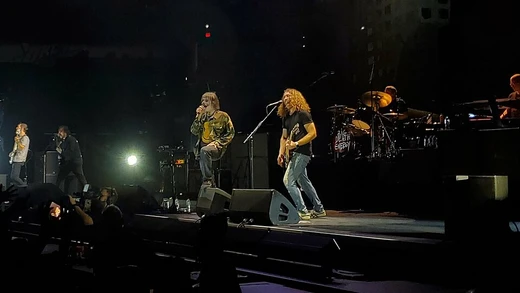
Punk Revival
Black paint, torn sleeves, and a scream that made a generation feel seen.

Punk Revival refers to the early-2000s cultural wave of punk-inflected rock and emo that reshaped alternative music, visual culture, and youth identity across the United States. My Chemical Romance, formed in New Jersey in 2001, became one of its most visible and emotionally resonant voices, channeling raw rebellion, theatrical storytelling, and a black-and-white aesthetic that made the movement feel both personal and cinematic.
As a 'faction' within the broader MCR fan universe, Punk Revival represents the ideological and stylistic bedrock the band was built on: a rejection of polished mainstream pop in favor of DIY energy, emotional honesty, and a visual language of studded leather, face paint, and military-inspired tailoring. It is less a single organization than a shared ethos that fans, bands, and subcultures adopted and reinterpreted for over a decade.
- Era
- Early 2000s (circa 2001–2010)
- Geographic roots
- New Jersey / East Coast, USA
- Key band
- My Chemical Romance
- Genre blend
- Punk rock, emo, alternative rock
- Visual signature
- Black-and-white palette, military tailoring, face paint, studded accessories
- Cultural context
- Early-2000s punk and emo revival scene
Lore & Background
The punk revival that My Chemical Romance rode into the spotlight was not a single event but a slow-burning reclamation. After the grunge era faded and corporate rock dominated the late nineties, a new generation of kids in New Jersey basements, New York clubs, and suburban bedrooms reached back to the raw, confrontational energy of 1970s and 1990s punk and fused it with the confessional lyricism of emo. The result was a sound that could shift from whispered vulnerability to a full-throttle wall of distorted guitars within a single song, and a visual identity that treated every concert like a small, staged rebellion.
MCR sat squarely in that current. Their early shows in the New Jersey club scene were loud, fast, and deliberately unpolished, and their debut and second albums carried the DNA of bands like Rancid, The Offspring, and the broader hardcore-punk lineage while adding a theatrical, almost operatic narrative layer. By the mid-2000s, that blend had become a cultural shorthand: the black-and-white military jackets, the stark face paint, the choreographed stage presence all signaled that this was not just a band but a movement, a visual and emotional language that fans could wear, perform, and argue about in school hallways and online forums.
The movement's emotional core was simple and radical: your feelings were valid, your anger was legitimate, and you did not need a label or a polished image to belong. Punk Revival, as MCR embodied it, turned that conviction into a shared identity that outlasted any single album cycle and continues to echo in every new wave of punk-adjacent music that follows.
In Their Own Story
The basement in Newark smelled like stale beer and hot amplifier tubes. A kid with a torn white t-shirt and a streak of black paint smudged across his cheek pressed his back against the cinderblock wall, watching the drummer hit a crash cymbal so hard the cheap lightbulb overhead flickered. Someone in the front row was screaming a lyric they'd memorized over and over in a bedroom three states away. The bassist kicked a pedal and the floorboards shuddered. For four minutes, none of them were a student, a cashier, a disappointment to a parent. They were just noise and paint and the particular electricity of a crowd that decided, tonight, to be loud. When the last chord rang out into the sticky silence, the kid wiped the paint from his cheek with his thumb, left a black smear on his jaw, and nodded to the person next to him. No words needed. The movement was already in their blood.
Reader's Guide
Who belongs: Punk Revival is not a single club but a loose constellation. It includes the MCR lineup in their early-to-mid career, the broader New Jersey and East Coast punk/emo scene of the early 2000s, the DIY zine and fanzine writers who documented shows, the kids in suburban bedrooms who built their entire identity around a black-and-white aesthetic, and the older punk purists who watched the revival with a mix of pride and suspicion. It is a movement of participants, not members.
Beliefs and representation: The core conviction is that emotional honesty and musical aggression are not opposites. You can be vulnerable and loud. You can grieve in a key signature and still kick a guitar amp. The movement rejects the idea that youth culture must be sanitized to be marketable, and it treats personal pain as a legitimate artistic fuel rather than a weakness to be hidden.
Visual identity: Black and white dominate. Military-style jackets, studded belts, torn or layered t-shirts, stark face paint (often a single black streak or a full mask), safety pins, and deliberately unpolished hair. Slang in the scene leaned on punk and emo vernacular: 'scene' as both compliment and warning, 'authentic' as the highest praise, and a general distrust of anything that felt 'too produced.'
Relationship to the band: MCR were both devotees and architects of the revival. They drew from punk's DIY ethos and emo's confessional lyricism, then amplified both into a cinematic, theatrical package. Critics sometimes accused them of over-producing the rawness; fans argued the production was the point, that the polish made the chaos feel intentional rather than accidental. Collaborators in the scene—other bands on the same tour circuits, independent labels, fan-run record stores—formed an ecosystem that kept the movement alive between albums.
Lasting impact: The visual and emotional vocabulary of early-2000s punk revival, as filtered through MCR, became a template. Every subsequent wave of punk-adjacent pop, indie emo, and theatrical rock carries its fingerprints. The idea that a band could be simultaneously a musical act, a fashion statement, and a narrative universe is now standard, but in 2001–2006 it felt genuinely new. The movement's grievance—against emotional suppression, against corporate homogeneity, against the expectation that young people be quiet and grateful—remains the undercurrent of every new punk scene that follows.
Did You Know?
- My Chemical Romance formed in New Jersey in 2001, placing them at the geographic and temporal heart of the early-2000s East Coast punk and emo revival scene.
- Gerard Way, the band's frontman, later became a widely recognized comic-book writer and artist, showing how the punk-revival impulse to tell stories across media carried well beyond the stage.
- The band's early visual identity—black-and-white military jackets, stark face paint, studded accessories—became so strongly associated with the scene that it is still a shorthand for 'emo' fashion in popular culture.
- The punk revival of the early 2000s was not a single genre but a cross-pollination of hardcore punk, emo, and alternative rock, and MCR's sound deliberately blended all three into a theatrical whole.
More in Factions & Movements
Elsewhere in the My Chemical Romance universe
Spotted an error? Know more?
This is a living reference — every entry is fact-audited, and reader corrections feed straight into our audit queue. Suggest an edit · See this site's audit record