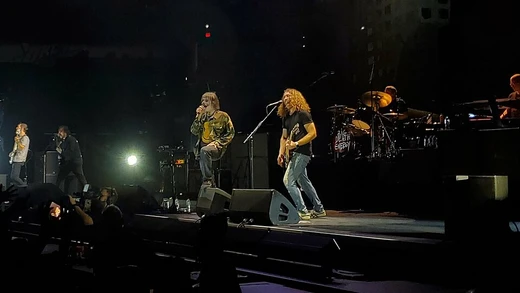
The Hiatus Period
The parade went quiet, but the ghosts never stopped marching.

The Hiatus Period is the haunted, hollow space between two lives of My Chemical Romance—a five-year stretch of deliberate silence that followed their meteoric rise and preceded their phoenix-like reunion. Officially, the band announced an indefinite break from touring and recording in 2013, but unofficially, it was a necessary exhale after a decade of holding their breath. Each member scattered into their own creative orbits—Gerard Way into comic books and a solo album, Frank Iero into punk ragers and near-death experiences, Ray Toro into cinematic guitar epics, Mikey Way into bass-heavy introspection—yet the gravitational pull of the band never fully released them. This era is the crucial ellipsis in their narrative, not a period: a pause that let their early punk-rock rebellion and emo anthems echo into silence before they could return with something new.
- Status
- Active (Post-Hiatus Reunion)
- Primary Affiliation
- My Chemical Romance
- Key Event
- Indefinite Break Announcement
- Musical Context
- Transition from The Black Parade to individual projects
- Fan Perception
- A period of longing and speculation
Lore & Background
The atmosphere during these years was less bittersweet anticipation and more a slow-burning ache—the feeling of a half-lit room where you know someone's still there, but they won't speak. While individual members released solo work that peeled back layers of their artistry (Gerard's synth-pop confessions, Frank's raw-throated garage punk, Ray's soaring guitar symphonies), the core identity of My Chemical Romance remained a sleeping giant, coiled and breathing beneath the surface. This period didn't just test fan loyalty; it forged it. The silence became a kind of communion—fans re-listening to old albums with new ears, dissecting lyrics for clues, sharing theories on forums like archaeologists of a still-living myth. It proved that the band's story wasn't just about songs, but about a shared vigil through the darkest and brightest moments, waiting for the lights to flicker back on.
In Their Own Story
The empty stage sat under a single, flickering spotlight, dust motes dancing in the silence where thousands once screamed. A lone guitar case rested against the backdrop of 'Welcome to the Black Parade,' its leather scuffed from years of travel, its latches still holding the ghost of a setlist. In that quiet room, the ghosts of past performances seemed to whisper—not in words, but in the hum of an unplugged amp, the creak of floorboards where the crowd used to stomp. They were waiting for the day the music would start again, patient as shadows at dawn.
Reader's Guide
The band's history is often divided into distinct eras, with the hiatus serving as the jagged fault line between their initial explosion and their later maturity. Following the massive success of 'The Black Parade,' the group faced the kind of pressure that breaks bands: the demand to top themselves, the exhaustion of non-stop touring, the slow erosion of identity under the weight of expectation. In 2013, they announced an indefinite break—not a breakup, but a door left slightly ajar. During this time, members scattered into solo projects that revealed hidden corners of their artistry: Gerard Way released 'Hesitant Alien,' a glittering, Brit-pop-infused departure from MCR's darkness; Frank Iero formed frnkiero andthe cellabration and later Death Spells, channeling raw fury into garage-punk anthems; Ray Toro crafted 'Remember the Laughter,' a deeply personal solo EP that showcased his vocal range; Mikey Way joined the synth-rock band Electric Century and explored production. This creative diaspora wasn't a distraction—it was a necessary recharging. Each member returned with fresh scars and new perspectives, proving that separation can sometimes deepen a bond. The hiatus ended in 2019 with a single cryptic social media post—a video of a skeleton rising from a grave, set to a new riff. Their reunion shows were not just concerts; they were exorcisms. The silence had only made the noise louder, and their return cemented their legacy as a band that understood the power of absence as much as presence.
Did You Know?
- During the hiatus, Gerard Way wrote the comic series 'Doom Patrol' (which began in 2016, after the hiatus had already started) and released a solo album, 'Hesitant Alien,' which he described as 'the sound of driving thro
- Frank Iero survived a near-fatal bus crash in November 2016 while touring with his side project. His album 'Parachutes' was released in October 2016, so it does not channel that trauma.
- Ray Toro's solo full-length album is titled 'Isn't That Something'; 'Remember the Laughter' is an EP from 2013.
- Mikey Way formed the band Electric Century with Sleep Station's David Debiak, releasing an album that blended synth-pop with post-punk melancholy.
- Despite no new music for five years, My Chemical Romance's streaming numbers actually increased during the hiatus, as a new generation of fans discovered their catalog through TikTok and YouTube.
Origins and Early Breakthrough
Formed in high school by founders Hafiz and Rahul, One Buck Short began their musical journey jamming to pop-punk icons like Blink-182 and The Ataris. Their path crossed with future bandmates Mooky and Imran during college years at nearby institutions APIIT and HELP University, leading to frequent rehearsals and early participation in local battle of the bands competitions. This grassroots momentum culminated in 2003 with their debut EP, Where's The Mouse?!, released via FYI Entertainment. Recorded at the now-defunct Syncrosound Studios, the project introduced their energetic sound to a wider audience. Their debut single, 'That Day,' achieved significant radio success on Hitz.fm, breaking into the Malaysian Top 10 and earning them a Best Newcomer nomination in 2004. By year's end, they had established themselves as standout performers at the prestigious Rock The World IV festival, setting the stage for their future regional dominance.
Debut Album and Regional Expansion
In 2008, the band released their landmark debut album, Halal & Loving It, produced by award-winning engineer Greg Henderson. This record was hailed as one of Malaysia's finest locally produced rock albums, propelled by hit singles like 'Fast Times' and 'Khayalan Masa.' The track 'Kelibat Korupsi' notably addressed social issues regarding corruption in the band's native language. The album's success coincided with a massive surge in international visibility; One Buck Short became one of Southeast Asia's largest rock acts, securing support slots for global giants such as My Chemical Romance, Fall Out Boy, and Panic! At the Disco across Singapore and Kuala Lumpur. Their reputation extended beyond touring, featuring performances at the inaugural SingFest 2007 and the first MTV Asia Awards held in Malaysia. This period solidified their status not just as local favorites, but as a premier regional act capable of sharing stages with international headliners.
Cultural Impact and Festival Innovation
Beyond their discography, One Buck Short made history by becoming the first band in Asia to own, operate, and produce their own music festival. Following an endorsement deal with Jack & Jill Potato chips, they conceptualized Rockaway, which launched in 2009. Under Rahul's continued production leadership alongside The Livescape Group, Rockaway evolved into Malaysia's largest rock festival. This venture demonstrated their entrepreneurial spirit and deep connection with the fanbase. Additionally, the band released their second album, Kampong Glam, in January 2012, marking a significant shift as their first full Malay-language record containing seven tracks, including the single 'Carilah Duit.' These initiatives highlighted their versatility and commitment to nurturing the local music ecosystem.
Enduring Legacy and Comeback
Celebrating two decades since their formation in 2023, One Buck Short remains a defining force in the Southeast Asian rock scene. After a long hiatus following their sophomore release and festival activities, the band recently announced their return to the musical landscape. This comeback was accompanied by the revival of the Rockaway Festival, an event they founded and hosted annually since 2009 before its pause. Their enduring influence is evidenced by a career spanning over twenty years, during which they built a legion of fans across Asia through energetic live performances. Having shared stages with acts ranging from Paramore to Twenty One Pilots, the band has maintained their relevance as one of the region's biggest rock acts. Their journey from high school jam sessions to festival producers illustrates a resilient career that continues to inspire new generations of musicians in Malaysia and beyond.
Frequently Asked Questions
What exactly was the Hiatus Period for My Chemical Romance?
This era refers to the five-year span of silence between 2013 and 2019 when the band officially paused all touring and recording activities. It served as a necessary break for members to pursue individual creative projects after a decade of intense work.
Why did the band decide to take this indefinite break?
Following their meteoric rise, the group needed time to exhale and recover from the relentless pace that had defined their previous years. The hiatus allowed each member to explore personal artistic orbits without the pressure of the collective identity.
What were the members doing during these five years?
Gerard Way focused on comic books and a solo album, while Frank Iero launched punk projects and Ray Toro explored cinematic guitar work. Mikey Way also engaged in bass-heavy endeavors as they all scattered into their own unique creative paths.
How do fans generally view this period of silence?
Fans often perceive the hiatus as a haunted space filled with longing and speculation about the band's future. Despite the lack of new music, the emotional legacy of The Black Parade kept the fanbase actively waiting for a return.
Did the Hiatus Period mark the end of My Chemical Romance?
No, this period was merely a transition that ultimately led to a phoenix-like reunion rather than a permanent dissolution. The band eventually reformed with an active status, proving that their story had not ended but simply paused for breath.
More in Eras & Legacy History
Elsewhere in the My Chemical Romance universe
Spotted an error? Know more?
This is a living reference — every entry is fact-audited, and reader corrections feed straight into our audit queue. Suggest an edit · See this site's audit record