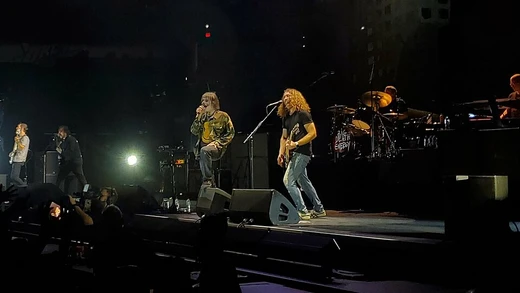
Danger Days: The True Lives of the Fabulous Killjoys (2010)
A neon-soaked middle finger to a gray, corporate world.

Danger Days: The True Lives of the Fabulous Killjoys is the fourth studio album by My Chemical Romance, released in 2010. It marked a radical departure from the dark theatricality of The Black Parade, swapping funeral suits for spray-painted leather and replacing cathedral organs with fuzzed-out guitar riffs. Embracing a vibrant, post-apocalyptic punk aesthetic inspired by comic books, desert landscapes, and rebellion against corporate control, the album introduced the fictional world of Battery City—a sterile, joyless metropolis ruled by the soulless corporation Better Living Industries—and the Killjoys, a scrappy band of outlaws fighting for color, noise, and freedom in a dystopian wasteland.
- Character
- The Fabulous Killjoys (Party Poison, Jet Star, Fun Ghoul, Kobra Kid)
- Role
- Rebels against Better Living Industries (BL/ind)
- Affiliation
- The Killjoys
- First appears
- Danger Days: The True Lives of the Fabulous Killjoys (2010)
- Status
- Active in lore; legacy continues in comics and fan culture
Lore & Background
The world of Danger Days is a stark contrast to the gloom of earlier MCR albums. Set in a future where Battery City, a sterile metropolis ruled by the sinister corporation Better Living Industries (BL/ind), suppresses all color and emotion, the Killjoys roam the sun-scorched desert wastelands outside. They are a band of freedom fighters who use music, style, and defiance to resist the Draculoids—BL/ind's faceless enforcers, their helmets gleaming like polished skulls—and spread joy and rebellion through every crackling radio frequency. The album's story is told through songs like "Na Na Na (Na Na Na Na Na Na Na Na Na)," a riotous anthem of spray-painted anarchy, and "SING," a defiant call for self-expression that echoes off concrete walls, while tracks like "The Kids from Yesterday" reflect on mortality and legacy, the dust settling on a battle that was always about more than survival.
In Their Own Story
The desert sun bleaches the bones of old cars, but the Killjoys' paint jobs still scream. Party Poison adjusts his ray gun, the red of his jacket a beacon against the dust. Jet Star revs his bike, its engine a promise of escape. Fun Ghoul and Kobra Kid scan the horizon for Draculoids, their masks grinning skulls. They know BL/ind will come, but today they have music, and the static on the radio carries their signal to the kids in Battery City. A single guitar riff cuts through the silence, and for a moment, the wasteland feels like home.
Reader's Guide
The Danger Days era began with the release of the album in November 2010, following a period of internal tension and creative reinvention. The band shed their black uniforms for colorful, punk-inspired outfits, and the sound shifted from theatrical rock to a more raw, garage-punk and power-pop style. The album was preceded by the single "Na Na Na" and accompanied by a series of music videos and a short film, "Art is the Weapon." The era also saw the launch of the "World Contamination Tour" and the release of the comic book series "The True Lives of the Fabulous Killjoys" in 2013, co-written by Gerard Way. The album's legacy endures as a cult favorite, celebrated for its bold aesthetic and themes of resistance, and it influenced a wave of pop-punk and alternative acts in the 2010s.
Did You Know?
- The character names Party Poison, Jet Star, Fun Ghoul, and Kobra Kid were adopted as stage personas by the band members during the era.
- The music video for 'Na Na Na' features actor Grant Morrison, a famous comic book writer, as a Draculoid.
- The album's original working title was 'The Mad Gear and Missile Kid', which later became the name of a companion EP.
More in Eras & Legacy History
Elsewhere in the My Chemical Romance universe
Spotted an error? Know more?
This is a living reference — every entry is fact-audited, and reader corrections feed straight into our audit queue. Suggest an edit · See this site's audit record