The Ghost
A dying boy who refused to be anyone else, then woke up in a world that wanted him to disappear.

The Ghost is the central narrative persona of My Chemical Romance, the character through whom the band's two most ambitious album sagas are told. First introduced in *The Black Parade* (2006), The Ghost is a young man confronting a terminal diagnosis, forced to reckon with every contradiction in his identity—his past, his loves, his fears, and the person he was before the world told him who to be. The character is inseparable from the band's frontman Gerard Way, who voices, writes, and embodies The Ghost on stage and in the album's storytelling.
The persona does not simply end with that first act. In *Danger Days: The True Lives of the Fabulous Killjoys* (2010), The Ghost re-emerges in a starkly different dystopian world, now a member of a ragtag resistance cell fighting a totalitarian regime. Across both narratives, The Ghost functions as a vessel for themes of mortality, self-determination, and the refusal to be defined by others—making the character far more than a costume or a gimmick, and instead the emotional spine of the entire My Chemical Romance mythos.
- Character
- The Ghost
- Role
- Protagonist / Central Persona of the album narratives
- Affiliation
- My Chemical Romance; The Black Parade (narrative); The Fabulous Killjoys (Danger Days narrative)
- First appears
- The Black Parade (2006)
- Associated performer
- Gerard Way (lead vocals, primary songwriter)
- Visual signature
- Black-and-white vertical striped shirt, dark eyeliner, stark monochrome aesthetic
- Narrative status
- Evolved across two album sagas; central figure in both
Lore & Background
In the *Black Parade* narrative, The Ghost is a young man in the final stretch of a terminal illness. The album unfolds as a kind of fever-dream procession through his life: the friends he made, the loves he lost, the identities he was pressured into wearing and the ones he clawed back. He is simultaneously every band member and none of them—a fractured self trying to hold together while the body fails. The parade itself, the marching band that surrounds him, represents the part of him that still wants to move, to make noise, to be seen, even as the world around him goes quiet. It is a story about the terror of being reduced to a diagnosis and the fierce, almost defiant act of saying, *I am more than what is happening to me.*
By the time *Danger Days* arrives, the tone has shifted from intimate grief to sprawling, almost comic-book dystopia. The Ghost is no longer in a hospital bed but in a grey, surveilled city where a Bureau of Education has stripped people of individuality and creativity. He is part of the Fabulous Killjoys, a group of misfits who fight back with art, music, and sheer stubbornness. The Ghost here is less a mourner and more a survivor—still haunted by the first act's loss, but channeling that grief into a refusal to be erased. The two albums together form a two-part arc: dying to the person the world expected, and then living as the person you actually are, even in a world built to prevent that.
What makes The Ghost resonate so deeply with fans is the duality. The character is never just a villain to be defeated or a hero to be worshipped; he is a mirror. Every listener who has ever felt boxed in, mislabeled, or told to be someone they are not sees a piece of themselves in that striped shirt and those dark, defiant eyes. The Ghost is, in the end, an invitation to grieve who you were and to fight for who you want to be.
In Their Own Story
The fluorescent lights in the Bureau of Education's processing hall hummed at a frequency that made The Ghost's teeth ache. He stood in line with the others—hands clasped, spines straight, the little identification tags pressed flat against their chests like a second, uglier skin. Somewhere behind the glass, a clerk was reading their numbers aloud. Not their names. Numbers.
He felt the familiar tightness in his chest, the one that had started in the hospital room all those years ago, the one that never fully left. Back then, the parade had been his way of walking out of that room without collapsing. Now the parade was a memory, a ghost of a ghost, and the world had traded his grief for something colder: a grey uniform, a grey schedule, a grey future where no one was allowed to be loud or strange or *too much.*
A hand found his elbow. Mikey, or whoever was standing there in the Killjoys' patched-together jackets, gave the smallest nod. *We're not done yet,* the nod said. *You're not done yet.*
The clerk called the next number. The Ghost unclasped his hands. He straightened his spine, but not the way they wanted. He straightened it the way a drumstick hits a snare—sharp, deliberate, a little bit angry.
He was not a number. He never had been.
Reader's Guide
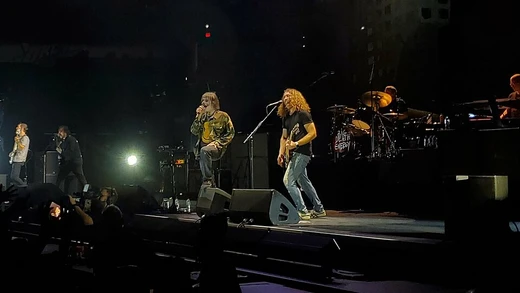
The real musician behind the persona is Gerard Way, the lead vocalist, primary songwriter, and creative engine of My Chemical Romance. On stage, Gerard is electric, theatrical, and unapologetically raw—his voice can go from a whispered croon to a full-throated scream in the same breath, and his physicality on stage is as much a part of the performance as the music. Visually, he has long been the face of the band's dark, theatrical aesthetic: the eyeliner, the sharp jaw, the deliberate styling that blurs the line between performer and character. His songwriting, even outside MCR, is intensely personal and narrative-driven, often drawing on themes of identity, loss, and the stories we tell ourselves to survive.
The fictional Ghost is the character Gerard channels in the album sagas. In *The Black Parade*, he is the dying protagonist, the fractured self, the one who is both the audience and the show. In *Danger Days*, he is the resistance fighter, the one who takes the grief of the first act and forges it into defiance. The two layers are not separate; fans experience them as one. When Gerard sings, the Ghost is in the room. When the Ghost marches, Gerard is the one keeping the beat. The dual identity is the whole point: a real person using a fictional mask to say the truest things, and a fictional character made real because a real person bled into every line. Gerard as the frontman and The Ghost as the persona are two halves of the same act of self-expression, and fans have spent nearly two decades treating them as inseparable.
Did You Know?
- The Black Parade album is structured as a continuous narrative journey, with The Ghost as the protagonist moving through stages of confronting a terminal illness, making the record function almost like a one-man theatric
- The iconic black-and-white vertical striped shirt associated with The Ghost became one of the most instantly recognizable visual identities in 2000s rock, and fans around the world have worn variations of it at concerts
- In the Danger Days narrative, The Ghost's world shifts dramatically from a personal, hospital-bound story to a broad dystopian setting involving a totalitarian Bureau of Education, showing the character evolving from mou
- Gerard Way has discussed in interviews how the album narratives were deeply personal, drawing on his own struggles with identity, self-doubt, and the pressure to conform, which is why many fans describe the Ghost as a un
More in Band Members & Personas
Elsewhere in the My Chemical Romance universe
Spotted an error? Know more?
This is a living reference — every entry is fact-audited, and reader corrections feed straight into our audit queue. Suggest an edit · See this site's audit record