Scene
Loud, black-and-white, and fiercely alive—the Scene turned a generation's heartbreak into a shared anthem.

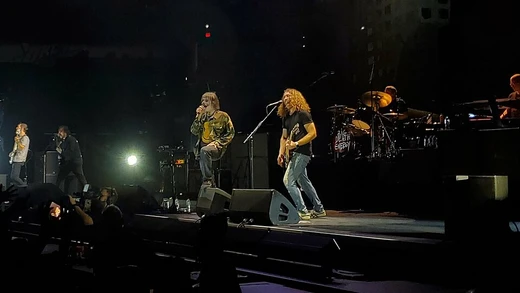
The Scene is the broad, self-organizing youth subculture that gave My Chemical Romance its home, its audience, and its visual language. Emerging in the early-to-mid 2000s across the American East Coast and spreading nationwide, it was less a single movement than a constellation of overlapping communities—punk, emo, post-hardcore, and goth-tinged alternative—united by a shared rejection of mainstream polish and a hunger for loud, emotionally raw music. MCR did not create the Scene, but their theatrical intensity, black-and-white iconography, and lyrics that treated heartbreak like a battlefield made them one of its most recognizable flags.
For fans, the Scene was not just a music genre; it was a social architecture. It had its own dress code, its own venues, its own in-jokes and out-groups, and its own unwritten rules about authenticity. To be 'in the Scene' meant you showed up to the all-ages show in your city, you knew the setlist by heart, and you understood that the band on stage was performing a story as much as a song. MCR leaned into that storytelling instinct harder than almost anyone, turning every concert into a small ritual and every album into a chapter in a larger narrative that the Scene collectively read, argued over, and tattooed onto its identity.
- Type
- Youth music subculture / alternative scene
- Core era
- Early-to-mid 2000s (peak roughly 2004–2009)
- Geographic heartland
- U.S. East Coast, especially New Jersey and New York
- Musical DNA
- Punk, emo, post-hardcore, gothic rock
- Signature aesthetic
- Black-and-white palette, dyed hair, eyeliner, layered band merch, platform footwear
- Relationship to MCR
- MCR both emerged from and elevated the Scene; the band became one of its most visible symbols
- Status
- Evolved into the broader 2010s–2020s indie/alternative landscape; still referenced by fans as a formative cultural moment
Lore & Background
The Scene was never a single, codified organization. It grew organically in basement shows, independent record stores, and zine photocopies, drawing on the punk ethics of the 1970s and 80s, the melodic sensitivity of 1990s emo, and the theatrical flair of goth and post-punk. What bound it together was a shared aesthetic vocabulary: monochrome clothing accented with a single bolt of color, heavy eyeliner regardless of gender, hair dyed in stark or pastel shades, and a wardrobe built around band tees, skinny jeans, and layered accessories. The music was the engine—fast, loud, emotionally unfiltered—but the fashion and social rituals were the body that made the Scene visible and recognizable in a crowd.
MCR sat at a particular intersection within that body. Their sound was more gothic and theatrical than the average emo band, their lyrics more narrative and cinematic, and their visual identity—Gerard Way's painted face, the band's black-and-white staging, the elaborate costumes—pushed the Scene's aesthetic toward something closer to performance art. That distinction mattered to fans. Being a 'scene kid' in the casual sense meant wearing the look and playing the songs on repeat; being a devoted MCR fan meant treating the band's output as a serialized story, dissecting album art, debating lyric meaning in online forums, and showing up to shows with handmade signs and hand-sewn patches. The Scene gave MCR a stage; MCR gave the Scene a mythology.
As the 2000s gave way to the 2010s, the Scene fragmented. Some of its energy migrated into the broader indie-rock and alternative-pop landscape; some of its fashion language was absorbed into mainstream streetwear. But for the generation that lived it, the Scene remained a formative identity—a period when music was not just something you streamed in the background but something you wore, argued about, and built friendships around in a cramped, sweat-soaked venue on a Friday night.
In Their Own Story
The bass thump hit before the doors even opened. You could feel it through the soles of your platform boots, a low, grinding pulse that turned the parking lot into a slow drum. The line snaked past the brick wall, past the hand-painted 'ALL AGES – NO PHONES' sign taped crookedly to the window, and everyone in it looked like they'd dressed in the same black-and-white palette by accident. Dyed tips. Smudged liner. A hundred band tees, each one a small flag of allegiance. Someone was already singing the opening riff, off-key and loud, and the person next to them was singing it back, correcting the words, and both of them were right.
Inside, the air was thick and warm, the kind of warm that makes your eyeliner run just a little. The stage was bare except for a single white sheet backdrop and a stack of amps that looked like they'd been hauled in by hand. Then the lights cut to black, a single spotlight snapped on, and the first chord rang out so clean and sharp it felt like a knife laid flat on a table. The crowd surged forward. You surged with them. For the next fifty minutes, nobody was a person with a job or a deadline or a phone buzzing in a pocket. You were just a voice in a wall of voices, a hand raised, a lyric half-remembered and shouted anyway. And when the last note decayed into the silence of a too-quiet room, nobody moved. Nobody needed to. The Scene didn't need a finale. It just needed the next show, the next Friday, the next parking-lot line where the bass would start humming through the concrete and you'd be back in it, boots on, liner smudged, alive.
Reader's Guide
Who belongs: Musicians, fans, zine-makers, venue promoters, DIY show-goers, and the broad spectrum of young people in the mid-2000s who found in loud, emotionally direct music a vocabulary for feelings that mainstream pop left unspoken. The Scene was inclusive in practice even if it had its own gatekeeping—your taste in bands mattered more than your background, but showing up and knowing the ethos was the entry ticket.
What they represent: Authenticity over polish. Emotional honesty over commercial safety. Community over individualism. The Scene's core belief was that music should be felt in the chest before it was understood in the head, and that a band's willingness to be vulnerable on stage was a form of courage worth celebrating. MCR embodied this by treating every album as a narrative arc and every live set as a performance, not just a gig.
Visual identity: The palette was overwhelmingly black and white, punctuated by a single accent color—neon green, hot pink, electric blue. Hair was dyed, often in high-contrast sections. Eyeliner was universal. Fashion layered band tees under flannel or leather, paired with skinny jeans, platform boots, and an accumulation of pins, patches, and chains. MCR-specific markers included the band's black-and-white logo, Gerard Way's painted face, and the gothic-punk staging that set them slightly apart from the more colorful 'scene kid' look.
Relationship to the band: MCR was simultaneously a product of the Scene and a force that shaped it. The band drew on the Scene's punk ethics and emotional intensity while pushing its aesthetic toward something more theatrical and literary. Fans were not passive consumers; they were co-creators of meaning, building online communities, trading hand-stamped patches, and treating the band's catalog as a shared text to be interpreted and reinterpreted.
Lasting impact: The Scene's DNA—DIY ethics, emotional directness, fashion as identity, community as curation—permeated the broader alternative landscape that followed. It proved that a generation could build a shared culture around music without a single central authority, and that a band willing to be strange, loud, and vulnerable could become a generational touchstone.
Did You Know?
- The Scene was never a single, organized movement; it was a loose, overlapping web of punk, emo, goth, and post-hardcore communities that shared an aesthetic and a set of values more than a formal structure.
- MCR's visual and theatrical approach—elaborate costumes, narrative-driven albums, painted faces—set them slightly apart from the more colorful 'scene kid' look, positioning them closer to gothic-punk performance art.
- The Scene's DIY ethics meant many of its most beloved shows happened in small, all-ages venues, basements, and community spaces rather than large arenas, reinforcing the idea that the music belonged to the people in the
- Gerard Way's background as a visual artist and storyteller influenced the band's approach to album art, music videos, and live staging, making MCR's output feel more like a serialized narrative than a collection of stand
More in Factions & Movements
Elsewhere in the My Chemical Romance universe
Spotted an error? Know more?
This is a living reference — every entry is fact-audited, and reader corrections feed straight into our audit queue. Suggest an edit · See this site's audit record