Post-Hardcore
Where the scream meets the symphony and the world is already on fire.

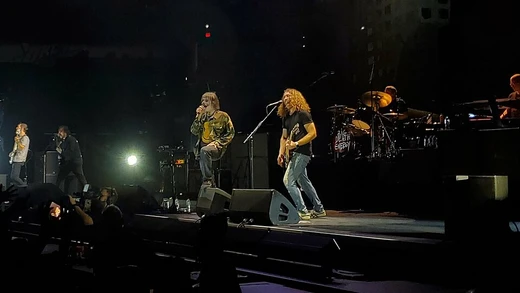
Post-Hardcore, in the My Chemical Romance universe, is far more than a musical subgenre—it is the cultural engine, the shared language, and the collective identity from which the band was forged. Born in the raw, DIY punk and hardcore scenes of New Jersey in the late 1990s and early 2000s, it gave voice to a generation that felt the world was collapsing into noise and irony. MCR did not simply play post-hardcore; they weaponized it, layering orchestral ambition, theatrical storytelling, and emotional extremity onto the genre's backbone of chugging riffs, screamed vocals, and dynamic whiplash between quiet and cacophony.
As a faction within the broader music landscape, Post-Hardcore carried its own dress code, its own grievances, and its own mythology. It was the scene that produced the black-and-white aesthetic, the skeleton in the top hat, the idea that a pop song could hit like a fist through a wall. Fans, fellow bands, critics, and the band itself all orbit this movement, each in a different gravitational relationship—devotees, skeptics, collaborators, or those who simply wore the skinny jeans and studded belts without understanding the theology underneath.
- Genre origin region
- New Jersey, USA
- MCR formation year
- 2001
- Defining band
- My Chemical Romance
- Key instruments
- Distorted electric guitar, bass, drums, layered vocals (clean and screamed)
- Cultural peak era
- Mid-2000s (circa 2004–2008)
- Associated label (MCR)
- Epic Records
- Signature aesthetic
- Black-and-white gothic theatricality, skeleton iconography
Lore & Background
In the MCR mythos, Post-Hardcore is the movement that refused to let pain be passive. It inherited the aggression of hardcore punk but married it to a pop sensibility and a narrative hunger that pure punk rarely indulged. The result was a sound that could shift from a whispered, almost fragile vocal line to a wall of distorted guitars within four bars, and the audience was expected to feel both the tenderness and the violence as one continuous experience. MCR's early self-released work and their breakthrough on the national scene placed them squarely in this tradition, alongside New Jersey and California peers who shared the same DIY ethos, the same black-clad visual language, and the same suspicion that the mainstream had already commodified everything worth feeling.
The faction's internal tensions are a recurring theme. There was the purist wing—those who saw post-hardcore as a vehicle for genuine, unfiltered emotional expression and resented the moment it became a fashion trend in suburban malls. There was the theatrical wing, exemplified by MCR's own evolution toward concept albums, elaborate stage production, and cross-media storytelling that blurred the line between band and narrative universe. And there was the commercial wing, which recognized that the genre's emotional directness was, in fact, a superpower for reaching millions. These three impulses never fully reconciled; they argued, split, and reformed, much like the band itself.
The lasting legacy of Post-Hardcore in the MCR world is that it proved a genre built on aggression and sincerity could also be cinematic, literary, and deeply personal. It gave Gerard Way the vocabulary to write about death as a parade, to frame a breakup as an apocalypse, to make the skeleton in the top hat not a costume but a manifesto. The movement's grievance—that it was dismissed as a phase, a phase for teenagers who would outgrow it—became the fuel for the band's most enduring work.
In Their Own Story
The basement in New Jersey smelled like cheap beer and solder from the amp heads. It was 2001, and the walls were still damp from the last rain. Five kids—maybe six, depending on who you asked and whether the drummer had shown up yet—stood in a loose semicircle, passing a guitar back and forth like a lit fuse. No one had a name for the band yet. No one had a name for the sound they were chasing, the one that lived somewhere between the thrash of the hardcore shows they'd moshed through since they were sixteen and the aching, melodic pull of the songs they'd been writing in bedrooms at 2 a.m. The walls were covered in torn posters, half of them from bands they'd seen once in a sweaty venue in Hoboken, the other half from comics and films that made them feel like the world was a story someone was telling badly. One of them—tall, ink-stained, already sketching characters in the margins of a setlist—said, quietly, 'What if it's not just loud? What if it's a whole thing? A whole world?' The room went still. The amp hummed. And somewhere in that silence, Post-Hardcore stopped being a genre on a zine cover and became a faction with a pulse.
Reader's Guide
Who belongs: Musicians, producers, and fans who identify with the post-hardcore ethos—emotional extremity delivered through dynamic contrast, theatrical presentation, and a refusal to separate 'serious' art from 'pop' art. In the MCR orbit, this includes the band members themselves, their early New Jersey scene peers, the fan communities that formed around shows and zines, and the broader 2000s indie/alternative audience that adopted the aesthetic.
What they believe: That music should be a full-body event. That vulnerability and aggression are not opposites but partners. That a band can be a narrative, a visual art project, and a live spectacle simultaneously without diluting the core. That the audience is not a consumer but a participant in a shared emotional ritual.
Visual identity: Predominantly black clothing, studded belts, skinny or distressed jeans, Converse or Doc Martens. Hair often dark, side-swept, or shaved on one side. The MCR-specific layer adds gothic theatricality: the Black Parade skeleton motif, top hats, white face paint, black-and-white color palettes, and the recurring imagery of death rendered as spectacle rather than horror. Slang and in-group language lean on the band's own vocabulary—'the parade,' 'the killjoys,' references to the album narratives.
Relationship to the band: MCR is both the faction's flagship and its most ambitious outlier. Devotees see the band as the movement's highest expression. Critics from the hardcore purist camp argue MCR diluted the genre's rawness with production polish and pop hooks. Collaborators—producers, visual artists, comic book writers—extend the faction's reach into adjacent media.
Lasting impact: Post-Hardcore, as lived through the MCR lens, proved that a genre could be a world. It gave a generation a shared visual and sonic language for processing grief, anger, and wonder. Even after the scene fragmented and the fashion cycled, the underlying grammar—dynamic contrast, narrative ambition, emotional honesty as a structural principle—remained embedded in the music that followed.
Did You Know?
- My Chemical Romance's early self-released material came out of the New Jersey hardcore and punk scene, placing them in the same geographic and cultural lineage as bands like Thursday and Rancid before they ever signed to
- Gerard Way's parallel career as a comic book artist—most notably with the Scott Pilgrim series—reflects a broader post-hardcore tendency to treat the band as a multimedia narrative project rather than just a musical act.
- The Black Parade album and its accompanying stage production represented a deliberate escalation of the post-hardcore aesthetic into full theatrical spectacle, with the skeleton-in-a-top-hat iconography becoming one of t
- Frank Iero joined My Chemical Romance after playing guitar in The Used, illustrating how the post-hardcore scene of the early 2000s functioned as a tight-knit network where musicians frequently moved between bands within
More in Factions & Movements
Elsewhere in the My Chemical Romance universe
Spotted an error? Know more?
This is a living reference — every entry is fact-audited, and reader corrections feed straight into our audit queue. Suggest an edit · See this site's audit record