Mausoleum
A cathedral of the dead where every eulogy is also a lullaby.

In the sprawling fan-built mythology surrounding My Chemical Romance, 'Mausoleum' refers to a thematic setting and emotional space that crystallizes the band's most enduring visual and lyrical preoccupations: death as ceremony, grief as architecture, and the afterlife as a place one must walk through rather than merely arrive at. It is not a single album but a recurring atmospheric world that fans extract from the gothic-funereal imagery threaded through the band's catalog, most intensely during the era associated with their 2006 record. Think of it as the 'room' the music builds in the listener's mind: cold marble, candle smoke, the weight of a casket lid, and the strange tenderness of someone who has already died but is still trying to say goodbye.
As a fan-encyclopedia entry, Mausoleum functions as a lens through which to read the band's broader universe. It is where the Black Parade's funeral procession slows to a standstill, where the Killjoys' neon chaos dims to a single flickering votive, and where the raw, shouted vulnerability of the band's earlier work finds its quietest, most formal expression. It is the setting where the story stops being about surviving and starts being about remembering.
- Associated band
- My Chemical Romance
- Primary thematic era
- The Black Parade (2006) and surrounding fan interpretation
- Visual aesthetic
- Victorian mourning, marble catacombs, candlelit stillness
- Core themes
- Grief, ceremony, the afterlife as a place one inhabits
- Tone
- Gothic, elegiac, quietly hopeful
- Fan role
- Atmospheric 'setting' extracted from recurring lyrical and visual motifs
Lore & Background
Mausoleum, as fans understand it, is less a location on a map and more a state of the narrative. In the band's most celebrated gothic work, the protagonist is already dead, already dressed in white, already marching in a parade that no one else can see. Mausoleum is the moment the parade stops. The music swells, the crowd disperses, and what remains is a single figure standing in a vast stone chamber, surrounded by the names of everyone they lost and everyone who lost them. It is the architectural counterpart to the song's quietest, most aching moments—the places where the shouting stops and the whisper does the work.
The setting draws heavily on Victorian mourning culture: the black gloves, the mourning rings, the photograph kept in a velvet case, the deliberate performance of grief as a social ritual. Fans read this not as coldness but as devotion. In Mausoleum, to keep the ritual is to keep the person alive in the only way the living can. The marble walls are not barriers; they are the walls of a room someone built specifically so the dead would not have to be alone.
What makes Mausoleum distinct from a simple 'haunted house' or 'cemetery' trope is its interiority. The conflict is never a ghost trying to scare the living. The conflict is the living trying to let go, and the dead trying to be remembered correctly. The forces driving the tension are memory, identity, and the slow erosion of a self that no longer has a body to house it. The tone is never purely dark; there is a persistent, stubborn tenderness, a sense that the ceremony itself is an act of love even when the love is directed at the dead.
In Their Own Story
The candles were the last thing to go. Not the light—the light had faded hours ago, replaced by the pale blue of a moon that had no business being visible through stone. But the wax kept pooling, kept dripping, kept doing its small slow work of remembering it was once a flame.
She stood in the center of the chamber, still in the white, still in the gloves, and she could hear the parade out there, muffled now, a distant drumbeat like a second heartbeat that was slowly losing the race against the first. The names on the walls were not carved. They were written. Handwritten. In ink that was still, impossibly, wet.
She touched the one closest to her. The stone was warm.
'You don't have to march anymore,' she said, to no one, to everyone, to the particular shape of absence that wore her face. 'You can just stand here. I'll keep the candles lit. I'll keep the room. You just… stay. For as long as the wax holds.'
The wax held. It always held. That was the whole point.
Reader's Guide
THE RULES In Mausoleum, time is measured in candle-burns, not hours. A person can remain in the space as long as someone in the living world still speaks their name aloud. The moment a name is fully forgotten, the figure dissolves into the marble and becomes part of the wall—another inscription, another wet line of ink. There is no violence here. There is only the slow, patient work of being remembered or not.
THE VISUAL AESTHETIC Think cold Carrara marble veined with grey, vaulted ceilings lost in shadow, floors polished to a faint mirror-sheen that reflects candlelight in long amber streaks. The palette is bone-white, charcoal, and the warm amber of flame. Clothing is formal, funereal: long-sleeved white, black gloves, simple dark coats. No neon. No chrome. The only color that moves is the flame.
INHABITANTS The dead, standing or sitting, always still, always facing the center of the room. The living, who enter to speak, to weep, to leave a photograph on a shelf. The candles themselves, which are not supernatural but are treated as such—small, stubborn, alive.
FORCES OF CONFLICT The tension is between memory and entropy. The living want to let go; the dead want to be kept. The candles are the negotiation. When the wax runs out, the room goes dark, and the dead must decide whether to dissolve into the wall or wait for the next person to strike a match.
TONE Gothic, elegiac, and—crucially—tender. This is not horror. This is a lullaby sung in a language the dead still understand.
Did You Know?
- The band's most celebrated gothic-era work is widely read by fans as a concept album in which the narrator is already deceased, making the entire record a kind of posthumous performance—giving Mausoleum its 'room after t
- Victorian mourning rituals—mourning rings, velvet photograph cases, formal black attire—recur as visual motifs in the band's imagery from that era, grounding the Mausoleum aesthetic in a specific historical culture of gr
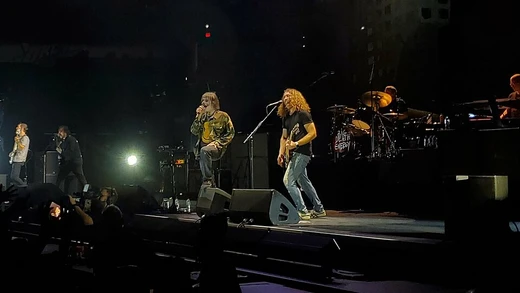
- The band's live performances during that period featured elaborate white-and-black costumes and full-body face paint, creating a visual language of funeral formality that fans directly map onto the Mausoleum setting.
- Fans often note that the band's quietest, most stripped-back vocal moments—where the shouting drops to a near-whisper—function as the 'interior' of Mausoleum, the private room behind the public ceremony.
More in Album Universes & Settings
Elsewhere in the My Chemical Romance universe
Spotted an error? Know more?
This is a living reference — every entry is fact-audited, and reader corrections feed straight into our audit queue. Suggest an edit · See this site's audit record