The Funeral Home
Where the last breath becomes the first step of the loudest parade ever marched.

The Funeral Home is a recurring thematic setting woven through My Chemical Romance's album narratives, most prominently in the gothic, death-obsessed world of The Black Parade. It functions less as a literal building and more as a liminal space—a place where the living and the dead overlap, where grief is performed rather than merely felt, and where the final curtain of a life becomes the opening act of a larger, more theatrical story. In the band's universe, it is the threshold where a character's personal ending transforms into a public spectacle, a parade of memory, regret, and defiant joy.
Fans of the MCR canon treat The Funeral Home as the emotional spine of the band's most celebrated era: a place where the rules of the living world dissolve, where a dying protagonist is handed a script they never asked for, and where the only honest response to annihilation is to dress up, march, and refuse to be quiet. It is the setting where the franchise's signature blend of melodrama, dark humor, and raw vulnerability reaches its most concentrated form.
- Primary Album Context
- The Black Parade (2006)
- Band
- My Chemical Romance
- Genre Context
- Post-hardcore / Pop-punk / Theatrical Rock
- Central Theme
- Mortality, grief, and the celebration of a life ending
- Narrative Role
- Liminal threshold between the living world and the character's final journey
- Tone
- Gothic, melodramatic, darkly humorous
Lore & Background
In the MCR album-universe, The Funeral Home is not a quiet, hushed place. It is loud, theatrical, and almost aggressively alive. The narrative logic of the setting is that death, in this world, is not a private event but a production—a staged, costumed, fully choreographed affair. The protagonist, a young person confronting their own ending, is ushered through a sequence of rooms and corridors that each represent a different emotional register: the cold, sterile waiting area of denial; the garish, over-decorated hall of performative grief; and the long, echoing corridor of the parade itself, where the dead march in full regalia and the living are expected to clap.
The setting draws on a specific visual and emotional vocabulary: black-and-white palette punctuated by violent splashes of red and gold, oversized top hats and military-style coats, crows perched on marble sills, and an ever-present sense that the architecture is slightly too large, slightly too grand for the small, frightened person walking through it. The Funeral Home is a place where the rules of etiquette are absurdly rigid—everyone must bow, everyone must weep on cue, everyone must smile at the right moment—and the protagonist's rebellion is simply to refuse the script, to laugh, to argue, to demand that their ending be their own rather than a performance for an audience that never knew them.
What makes the setting resonate with fans is its insistence that grief and joy are not opposites but collaborators. The Funeral Home does not resolve the story; it amplifies it. The character does not escape death. They walk through it, dressed up, marching, singing, and leaving a trail of confetti and broken cymbals. The setting is the band's argument that the most human response to the end is not silence but the loudest, most ridiculous, most beautiful noise you can make before the lights go out.
In Their Own Story
The corridor was longer than it should have been. He could count the chandeliers—seven, eight, nine—and each one was a little further away than the last, as if the hallway were stretching to give him more time to be afraid. The marble under his shoes was cold enough to ache. Somewhere ahead, a band was tuning up. Not a funeral dirge. Something with a snare drum. Something with a key change.
A woman in a black gown with a feather the size of a crow's wing stopped him at the threshold. "You're late," she said, and her smile was the kind of smile that had been practiced in a mirror for years. "The parade doesn't wait."
He looked down at his hands. They were shaking. He looked up at the corridor beyond her, where a line of figures in oversized coats and absurd hats stood at attention, their faces painted white, their eyes wide and wet and waiting for him to start walking.
He started walking. He did not cry. He did not bow. He walked with his shoulders back and his jaw set, and behind him the band struck up, and the crows on the marble sills opened their beaks and screamed in a key that was almost, almost a major chord.
The Funeral Home did not end. It just got louder.
Reader's Guide
The Funeral Home operates on a single governing rule: the dead are not gone; they are merely in a different act. The setting is a sprawling, gothic estate that exists in a permanent state of half-celebration, half-mourning. Every room is dressed for a performance that never quite begins. The architecture is Victorian-Gothic with a theatrical overlay—tall arched windows, black marble floors, gilded moldings that are slightly tarnished, and an ever-present smell of lilies and cold iron.
Key locations include the Waiting Atrium (sterile, white, silent, where the protagonist first arrives and is handed a script they never requested); the Hall of Regalia (a vast, candlelit room where the dead dress in absurd, over-the-top costumes—military coats, top hats, sequined capes—and prepare for the march); and the Parade Corridor (a long, echoing hallway that stretches impossibly far, where the procession moves in slow, deliberate steps while the band plays from a floating stage at the far end).
The inhabitants are the dead, rendered as stylized, almost puppet-like figures with painted faces and wide, wet eyes. They are not hostile; they are expectant. They want the protagonist to participate, to perform, to be seen. The central conflict is the protagonist's refusal to accept the script—their insistence that their ending be messy, loud, and unscripted rather than a polished production.
The tone is gothic-melodramatic with a strong undercurrent of dark satire. The setting mocks the rituals of grief while simultaneously honoring them. It is a world where the most radical act is to laugh in a room where everyone else is crying, and the most loving act is to march forward even when you know the parade has no destination.
Did You Know?
- My Chemical Romance formed in 2001 in New Jersey, and their theatrical, costume-heavy live performances became a defining feature of the mid-2000s pop-punk and post-hardcore scene.
- The Black Parade (2006) is widely regarded as one of the most narratively ambitious albums in the band's catalog, built around a central character confronting their own death and being taken on a symbolic journey.
- Gerard Way, the band's lead vocalist and primary songwriter, is known for his highly visual, comic-book-influenced approach to album art and narrative worldbuilding, which fans have expanded into a rich, unofficial lore
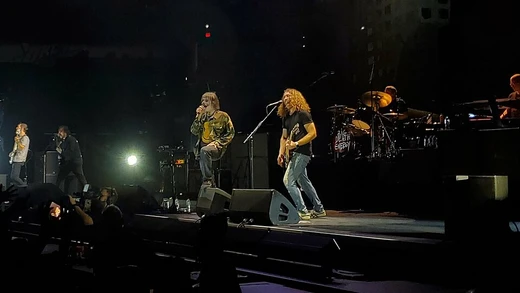
- The band's live shows during the Black Parade era featured full costume changes, elaborate stage design, and a narrative arc that treated each concert as a single, continuous theatrical performance rather than a simple s
More in Album Universes & Settings
Elsewhere in the My Chemical Romance universe
Spotted an error? Know more?
This is a living reference — every entry is fact-audited, and reader corrections feed straight into our audit queue. Suggest an edit · See this site's audit record