Danger Days Era (2010)
Neon rebels in a chrome-plated hell.

The Danger Days Era (2010) marks My Chemical Romance's boldest stylistic departure, trading the theatrical gloom of The Black Parade for a sun-blasted, post-apocalyptic wasteland of neon and rebellion. Anchored by the album *Danger Days: The True Lives of the Fabulous Killjoys*, this era introduced the fictional world of Battery City, a sterile corporate dystopia, and its resistance fighters—the Killjoys—who rode through the desert in a battle for individuality and freedom. It redefined the band's visual and sonic identity, embracing punk, glam, and power-pop influences while telling a sprawling narrative through music, music videos, and comic books.
- Character
- The Fabulous Killjoys
- Role
- Rebel group fighting against Better Living Industries (BL/ind)
- Affiliation
- The Killjoys (Party Poison, Jet Star, Fun Ghoul, Kobra Kid, and later the Girl)
- First appears
- 2010 album *Danger Days: The True Lives of the Fabulous Killjoys*
- Status
- Active in the fictional timeline; legacy continues in fan culture
Lore & Background
In the world of *Danger Days*, Battery City is a controlled, colorless metropolis run by the corporation Better Living Industries (BL/ind), which suppresses emotion and creativity through a drug called 'Extermination.' Outside its walls lies the desert—a lawless, vibrant zone where the Killjoys roam, broadcasting pirate radio and fighting to preserve art, love, and chaos. Each member of the Killjoys adopts a code name and a distinct visual identity, from Party Poison's red bandana and star-spangled jacket to Kobra Kid's gas mask and blue hair, embodying a DIY ethos that resonated deeply with fans.
In Their Own Story
The sun bleeds orange over the cracked asphalt of the Zone. A battered Trans Am kicks up dust as Party Poison leans out the window, microphone in hand, shouting into the static of pirate radio. 'This is for every kid who ever felt like a ghost in their own city!' Behind him, Fun Ghoul revs a motorcycle, its headlights cutting through the haze. Kobra Kid adjusts his gas mask, scanning the horizon for BL/ind drones. Jet Star grips the wheel, a half-smile under his shades. The Girl, small and fierce, clutches a ray gun in the back seat. They are outnumbered, outgunned, and absolutely free.
Reader's Guide
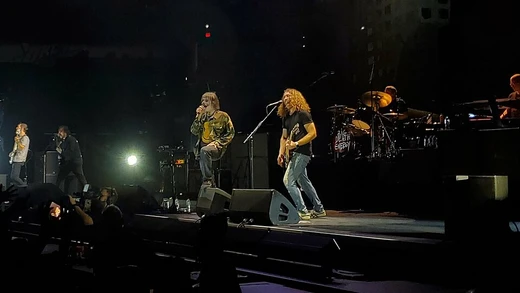
The Danger Days era was born from near-collapse. After scrapping a planned *Black Parade* follow-up (the moody, disillusioned *Conventional Weapons*), the band nearly broke up in 2010. Instead, they retreated to the California desert, traded their marching-band uniforms for spray-painted jackets, and emerged with *Danger Days: The True Lives of the Fabulous Killjoys* in November 2010. The first single, 'Na Na Na (Na Na Na Na Na Na Na Na Na),' dropped like a Molotov cocktail—its video a frantic, neon-soaked chase through the Zone, introducing Party Poison, Jet Star, Fun Ghoul, and Kobra Kid to a bewildered fanbase. The band’s wardrobe shifted from mourning to mayhem: bleached denim, gas masks, star-spangled bandanas, and a color palette that screamed in the face of Battery City’s gray. The world tour that followed was part rock show, part guerrilla theater, with fans dressing as Killjoys and the stage bathed in desert sunbursts and static. The lore expanded beyond the album into a comic book series co-written by Gerard Way and Shaun Simon, which deepened the tragedy and rebellion of the Zone. Initially, the era divided fans—some missed the theatrical gloom of *The Black Parade*, others found the shift jarring. But over time, *Danger Days* has been reclaimed as a defiant, queer-affirming masterpiece: a middle finger to conformity, a love letter to outsiders, and a testament to the band’s refusal to repeat itself. For many, it remains the era where My Chemical Romance taught them to fight back—not with swords, but with spray paint and a pirate radio signal.
Did You Know?
- The character of the Girl (later named Grace) was inspired by a real fan who showed up to a concert dressed as a Killjoy; Gerard Way saw her in the crowd and wove her into the story as a symbol of the resistance's next g
- The album was nearly called *The True Lives of the Fabulous Killjoys* after the band trashed an entire album's worth of darker, disillusioned material (later released as *Conventional Weapons*), deciding instead to chase
- The music video for 'SING' was a massive, fan-invited desert shoot—hundreds of fans drove out to the Mojave, painted their faces, and became the army of rebels in the video, blurring the line between fiction and real-lif
- The Killjoys' code names—Party Poison, Jet Star, Fun Ghoul, and Kobra Kid—were partly lifted from old punk aliases (like Sid Vicious's 'Party Poison' tag) and the bombastic heroics of comic books, giving each member a my
More in Eras & Legacy History
Elsewhere in the My Chemical Romance universe
Spotted an error? Know more?
This is a living reference — every entry is fact-audited, and reader corrections feed straight into our audit queue. Suggest an edit · See this site's audit record