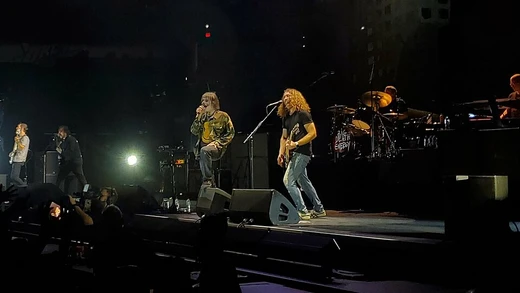
The Black Parade (2006)
Life is a parade. Death is the grand marshal.

The Black Parade is the third studio album by My Chemical Romance, released in 2006. It is a rock opera that follows the story of a dying cancer patient known as The Patient, who reflects on his life and death. The album marked a dramatic stylistic shift from the band's earlier punk and hardcore roots toward a grand, theatrical, and arena-ready sound, heavily influenced by classic rock and glam. Its release and subsequent world tour cemented My Chemical Romance as one of the defining rock acts of the 2000s, and the album's dark, emotional narrative and iconic imagery—especially the black-and-white marching band uniforms—became a cultural touchstone for a generation of fans.
- Album
- The Black Parade
- Release Year
- 2006
- Lead Singer
- Gerard Way
- Genre
- Rock opera, alternative rock, glam rock
- Narrator
- The Patient (a dying man)
- Key Songs
- Welcome to the Black Parade, Famous Last Words, Teenagers
- Legacy
- Considered a landmark concept album of the 2000s
Lore & Background
The Black Parade is built around the story of The Patient, a man dying of cancer who is visited by death in the form of a ghostly marching band. The album's narrative unfolds as The Patient recalls his life, his regrets, and his final moments, with the central metaphor of a black parade representing the journey into the afterlife. The band itself adopted the persona of the Black Parade, performing live in elaborate marching band uniforms—black wool, gold braid, and epaulets that weighed like armor—and using a theatrical stage show that included a coffin, a hospital bed, and a giant skeleton that loomed over the crowd like a grinning memento mori. This immersive storytelling was a deliberate departure from their earlier work, aiming to create a timeless, universal experience about mortality and memory, as if the album itself were a eulogy you could dance to.
In Their Own Story
The hospital room is cold and white. The Patient lies in his bed, the machines beeping a slow rhythm. Outside the window, a faint sound of drums begins, distant but growing closer. He remembers his father taking him to a parade as a child, the music so loud it shook his bones, the candy-striped paper hats, the way the sun caught the brass. Now, the parade is coming for him. The door creaks open, but no one is there—only the echo of a brass section and the faint smell of gunpowder and roses, like a funeral that's also a celebration. He closes his eyes, and the black parade steps into the room, their boots silent on the linoleum, ready to lead him home.
Reader's Guide
The Black Parade era began with the album's release in October 2006, following a period of intense creative pressure and personal struggles for the band. The album was recorded in a haunted mansion in California, which influenced its dark, theatrical tone. The band's lineup remained stable: Gerard Way (vocals), Ray Toro (guitar), Frank Iero (guitar), Mikey Way (bass), and Bob Bryar (drums). The tour was a massive global undertaking, featuring elaborate stage production and the band performing in full character as the Black Parade. The album's lead single, Welcome to the Black Parade, became an anthem, and the album sold millions worldwide. The era concluded in 2008 after a grueling tour cycle, with the band taking a hiatus that led to the creation of their next album, Danger Days: The True Lives of the Fabulous Killjoys. The Black Parade's impact on rock music was profound, inspiring a wave of theatrical, narrative-driven albums and solidifying My Chemical Romance's legacy as a band unafraid to tackle big themes with grand gestures.
Did You Know?
- The album was produced by Rob Cavallo, who had previously worked with Green Day on American Idiot, another rock opera.
- The iconic marching band uniforms were inspired by the album's theme of death as a parade, and were designed to evoke both celebration and mourning.
- The song 'Mama' features vocals from Liza Minnelli, a legendary Broadway and film star, adding to the album's theatrical feel.
- The album's title and concept were partly inspired by a dream Gerard Way had about a dying man being led away by a ghostly marching band.
More in Eras & Legacy History
Elsewhere in the My Chemical Romance universe
Spotted an error? Know more?
This is a living reference — every entry is fact-audited, and reader corrections feed straight into our audit queue. Suggest an edit · See this site's audit record